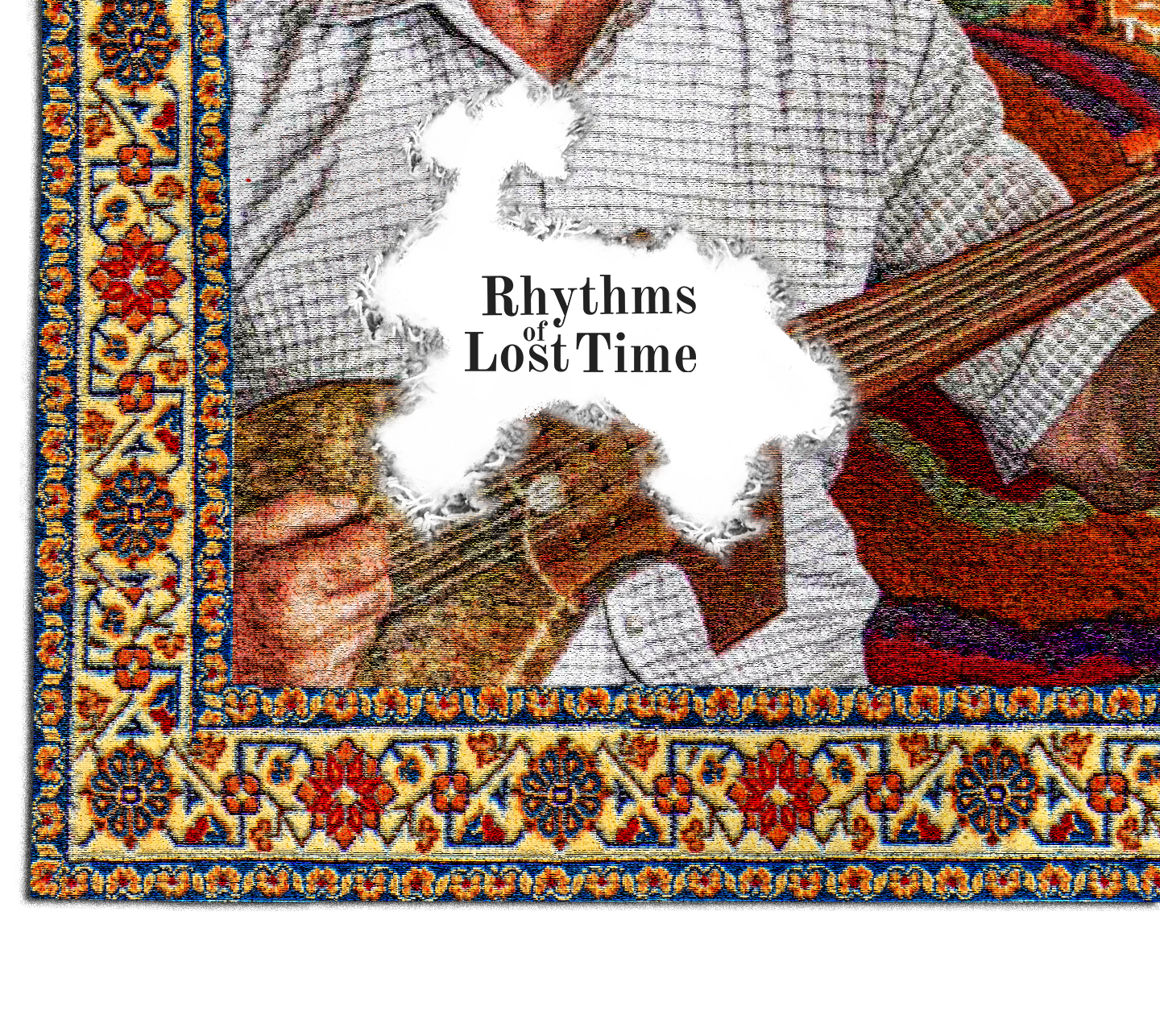
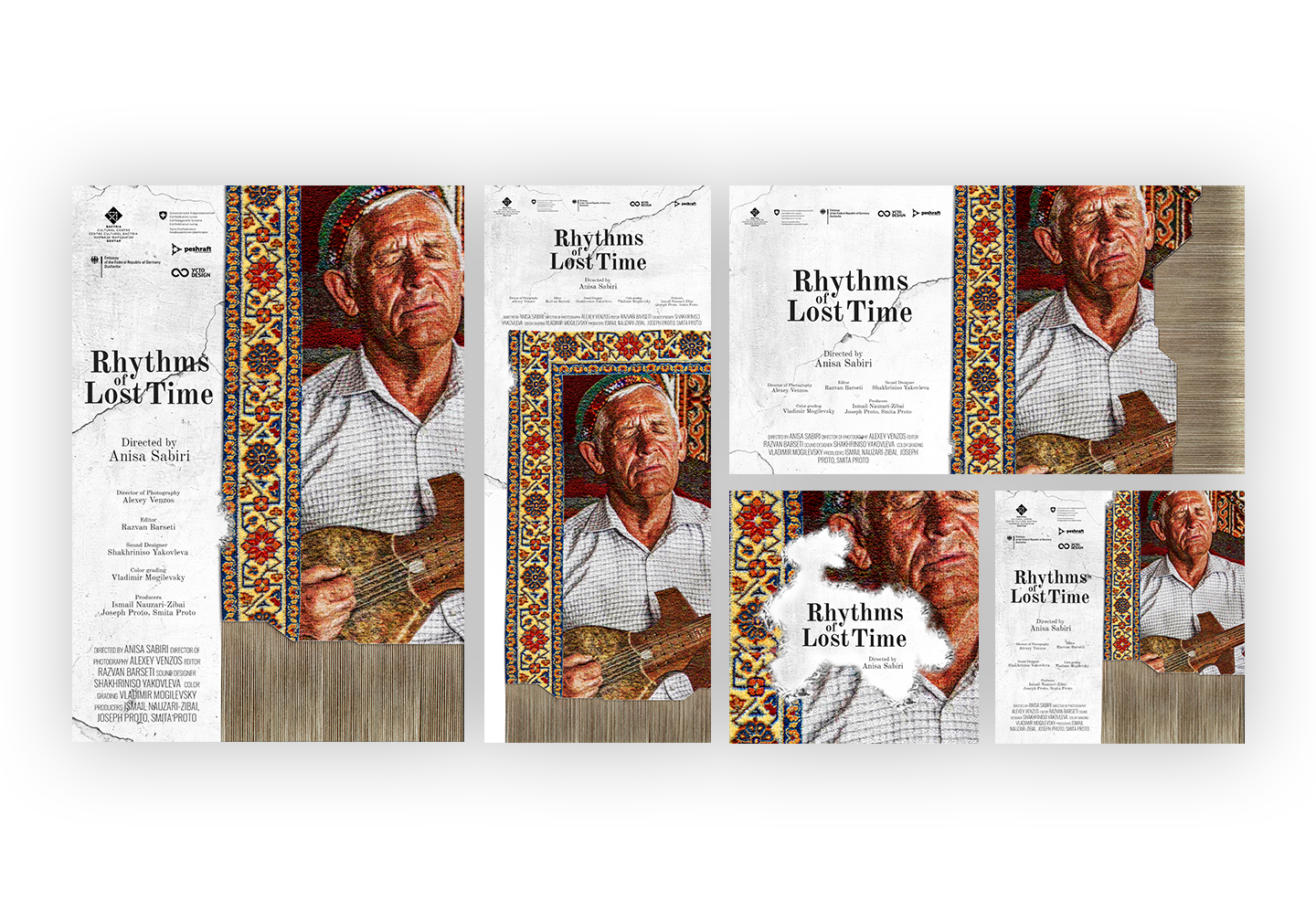
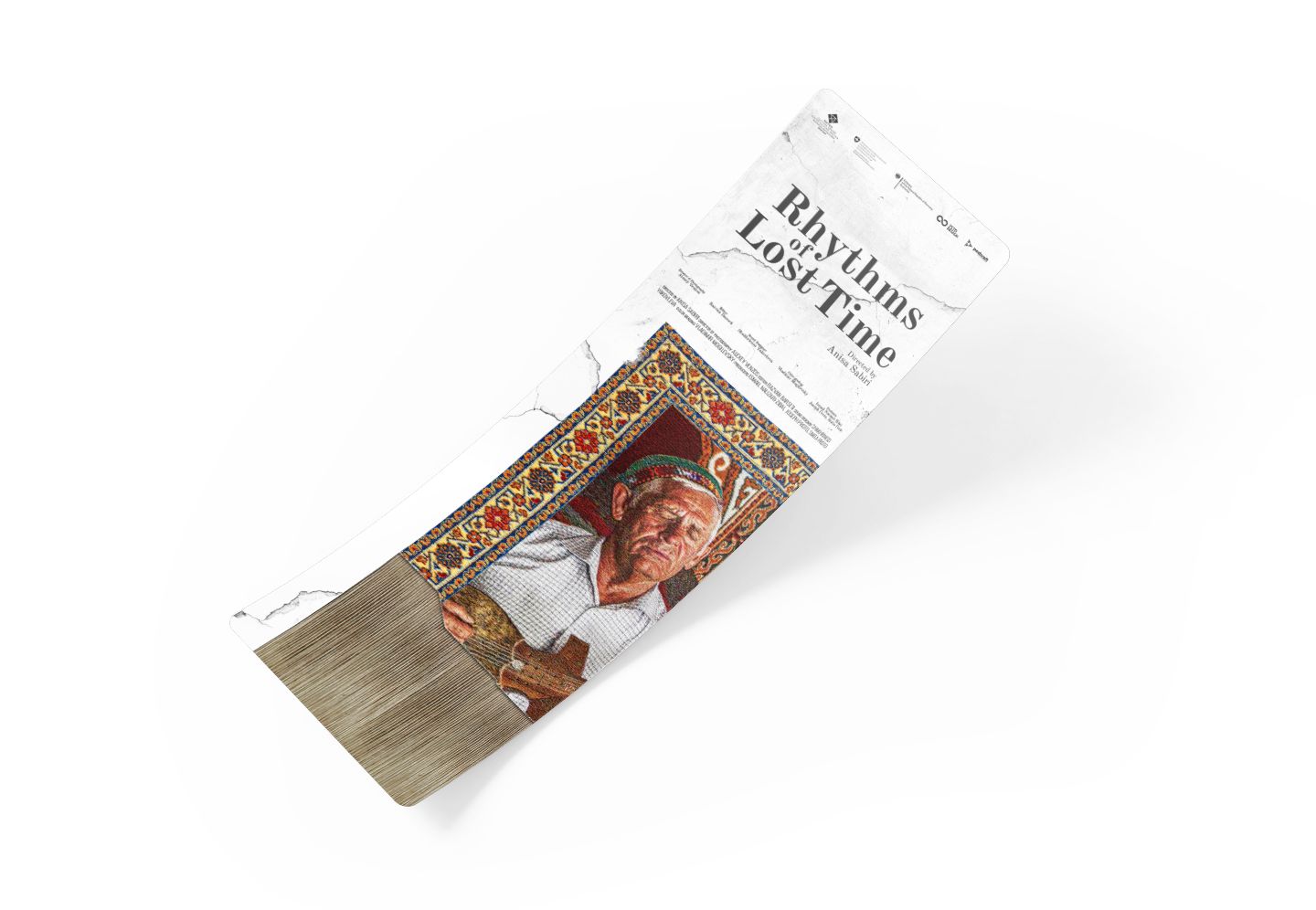
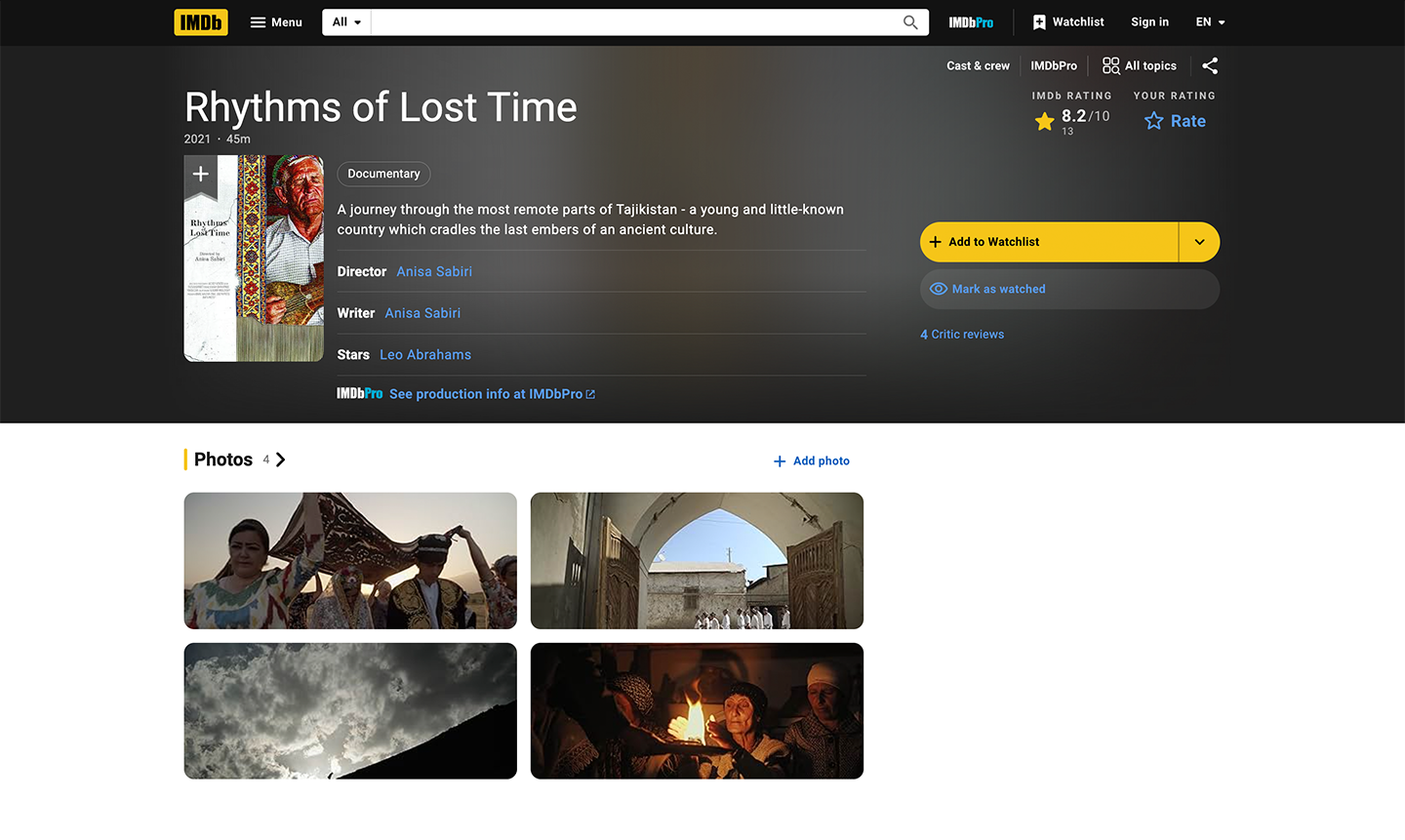
“Rhythms of Lost Time” is a documentary that takes viewers on a journey through the most remote parts of Tajikistan — a young, little-known country that still carries the last embers of an ancient culture. It was my third collaboration with director Anisa Sabiri. My role was to design the poster and other promotional materials.
I presented the first poster concept during the film’s editing stage, but as the documentary evolved, so did its tone and message. The final vision changed so much that my initial ideas no longer fit. In the end, I had to start over completely and rebuild the design from scratch.
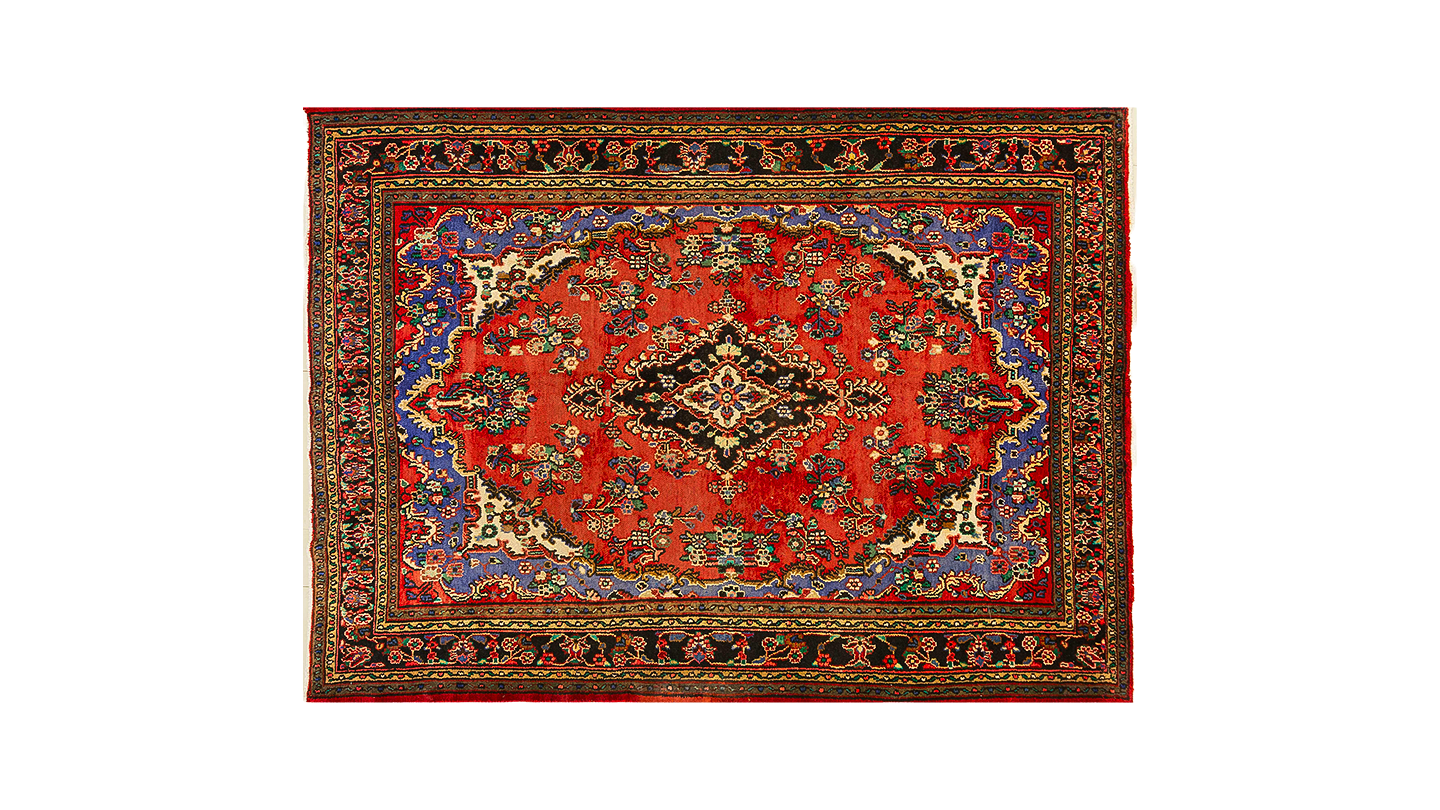
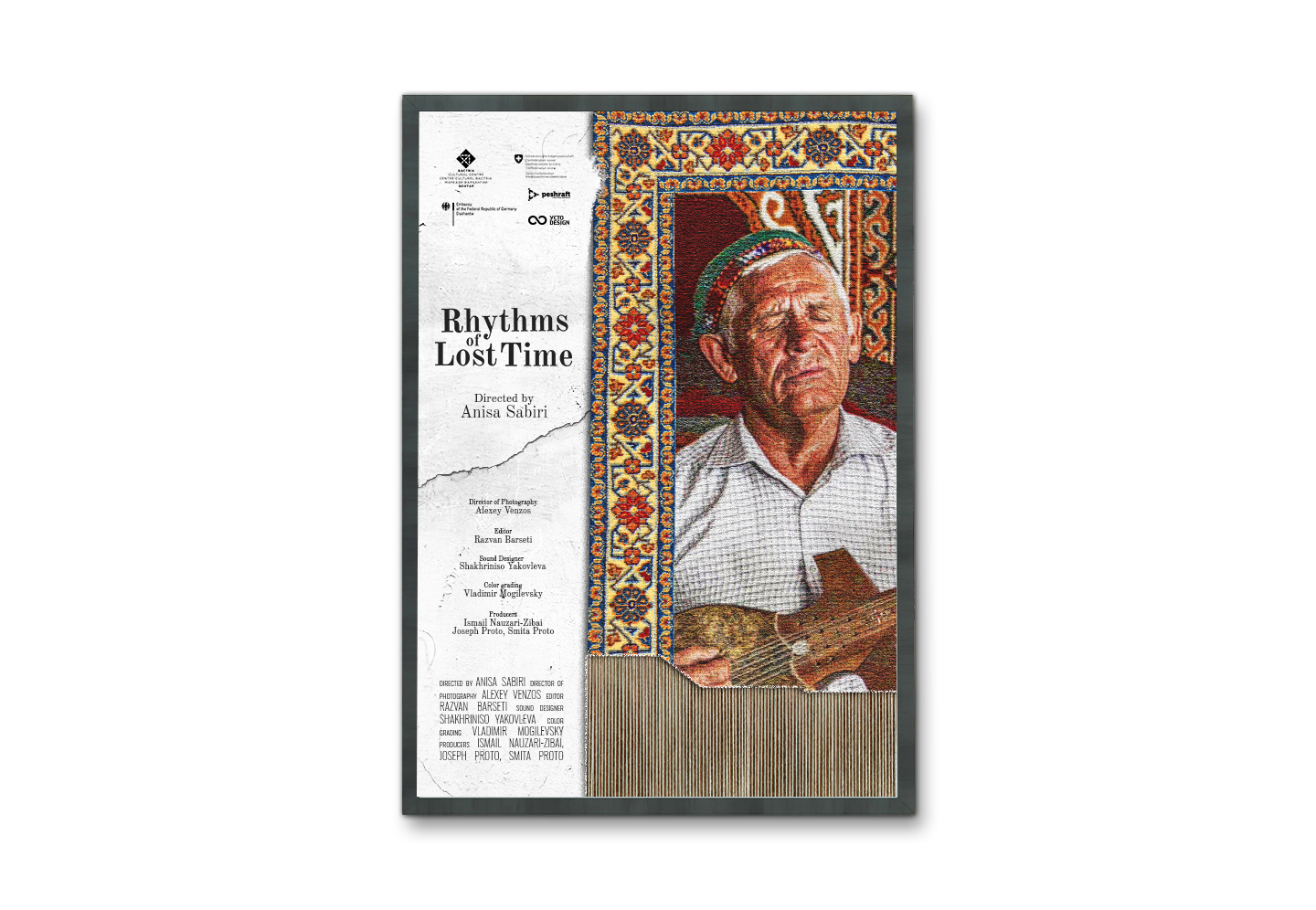
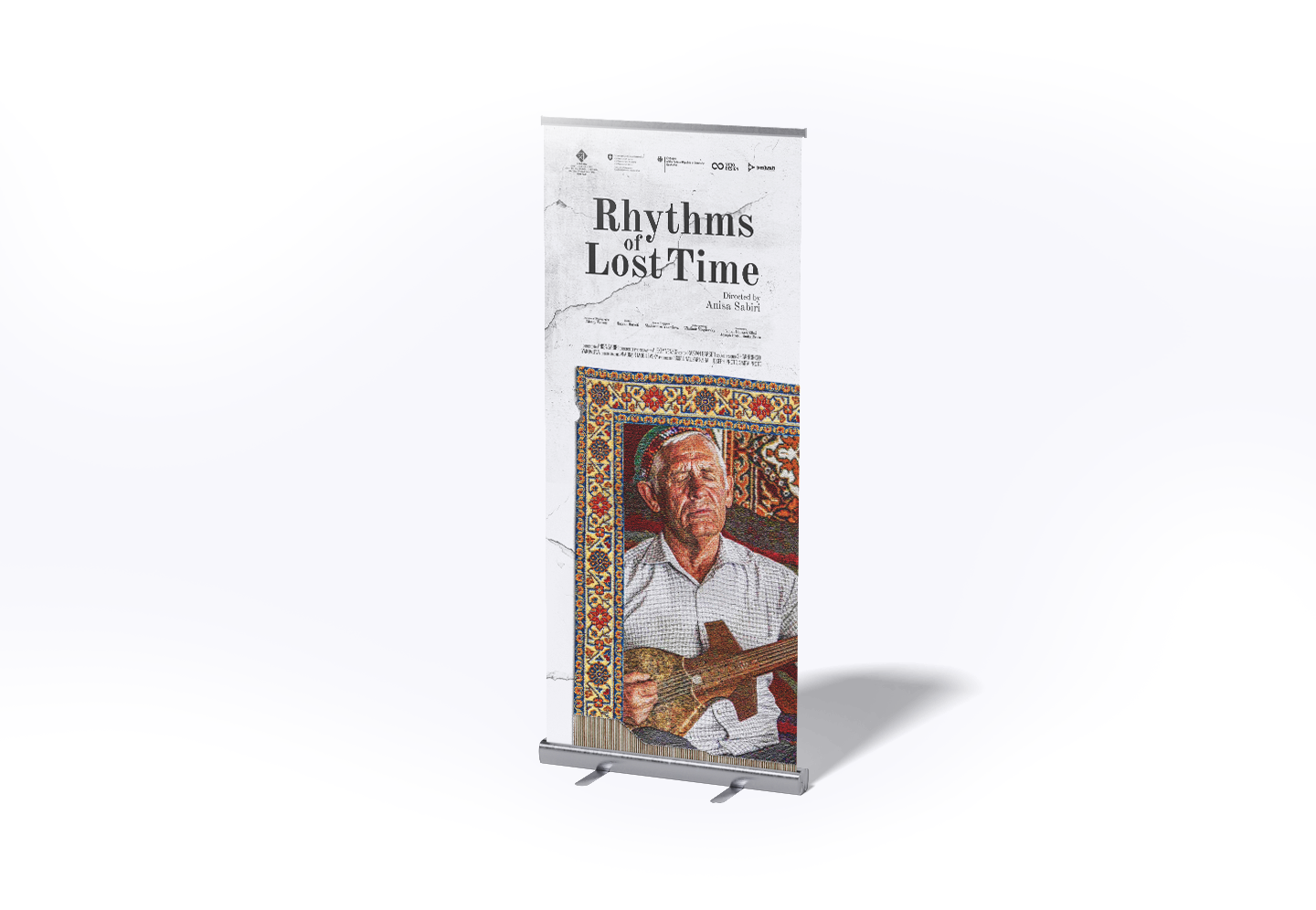
Since the documentary focused on Tajik traditions, I decided to use a wall carpet as the main visual element. Carpets are an essential part of everyday life in Tajik homes — often passed down from one generation to the next and proudly displayed on the wall. Their intricate patterns have always felt almost hypnotic to me, and they make a perfect canvas for visualizing just about anything.
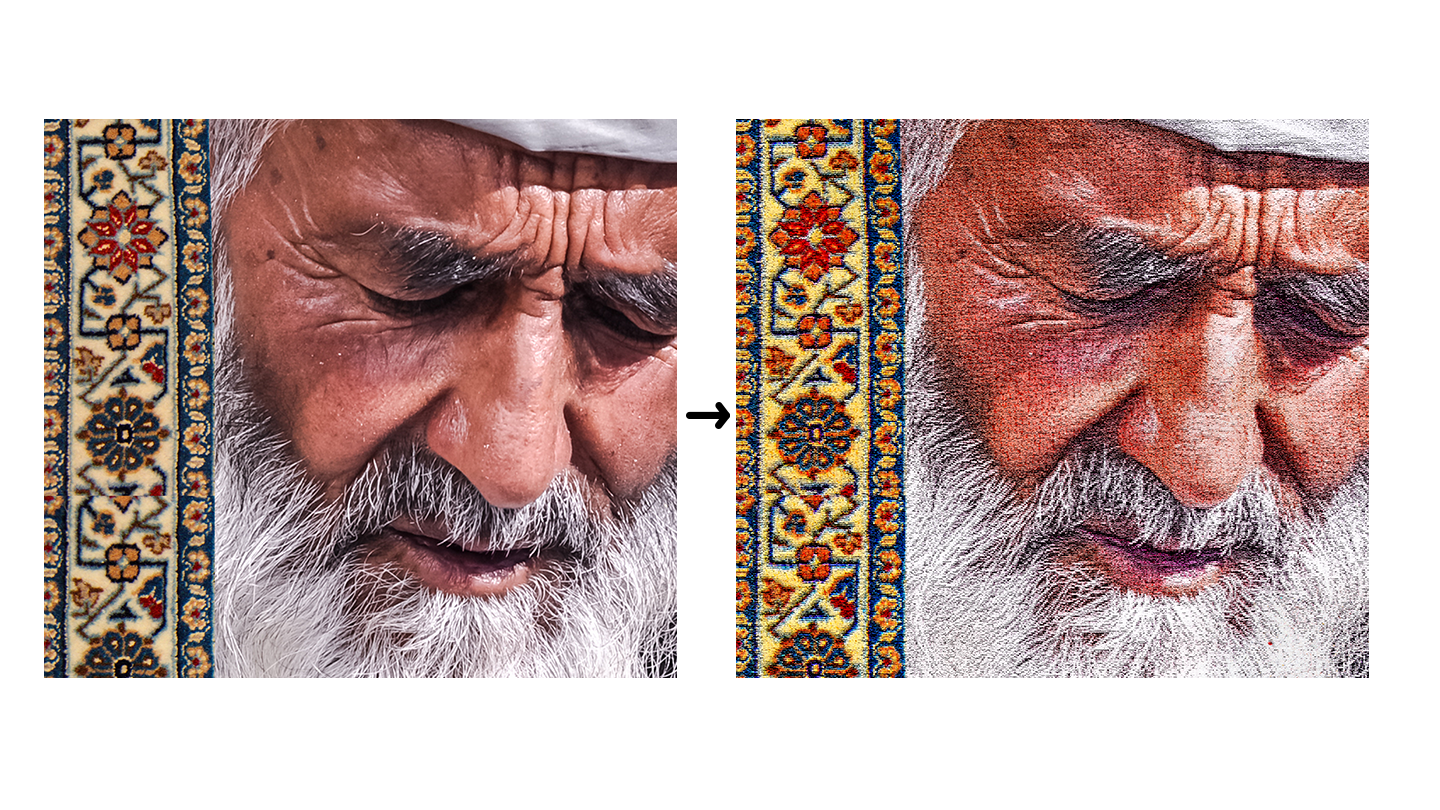
Using a mix of effects and little design tricks, I managed to build a template that made everything look like it was actually woven into a carpet — texture and all.
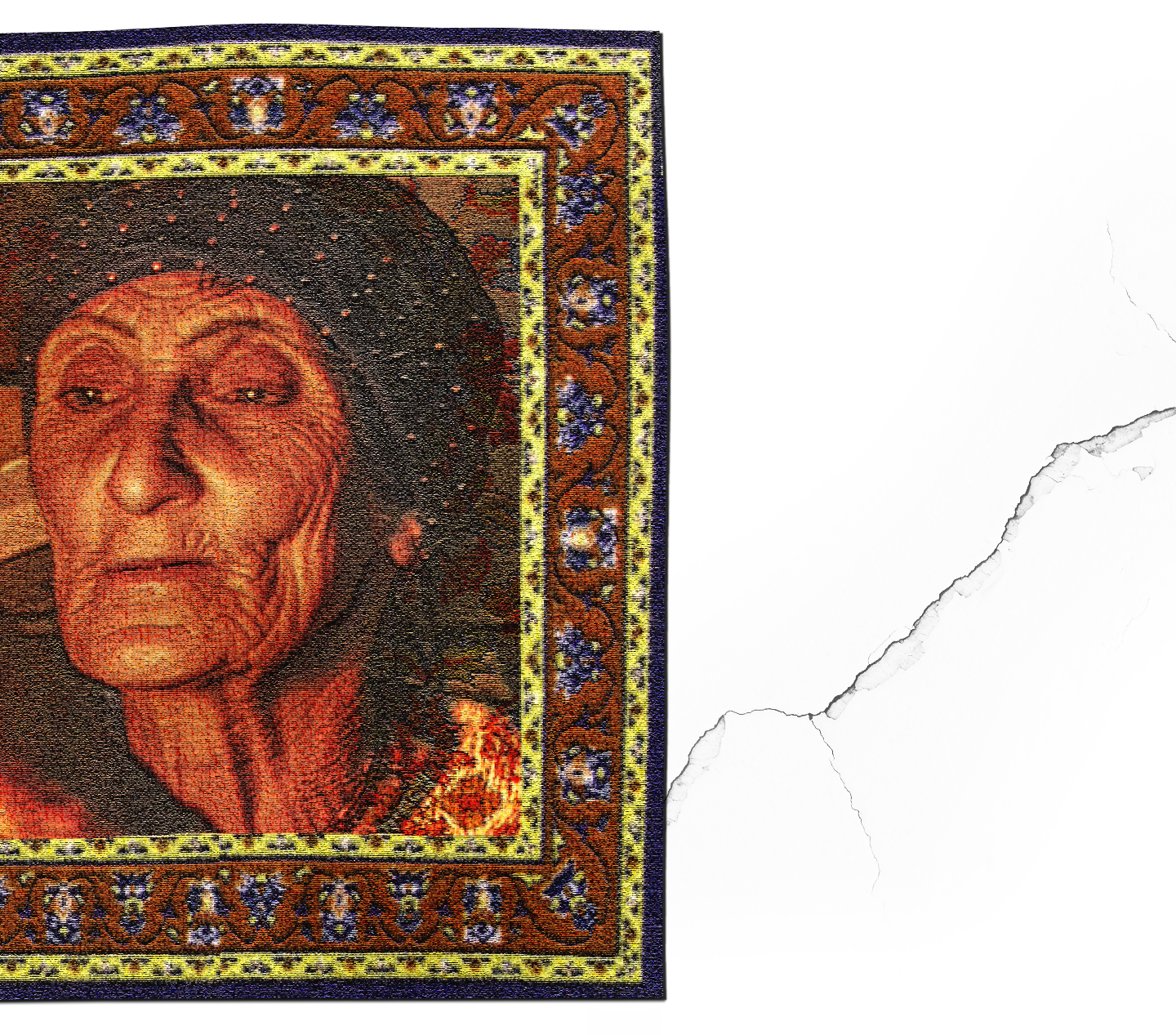
The carpet doesn’t sit at the center of the poster. Behind it is a cracked white wall — a symbol of time and decay. I wanted to show how ancient traditions hang on, suspended on walls that grow weaker with each generation. They’re still there, but barely — holding on in a changing world.
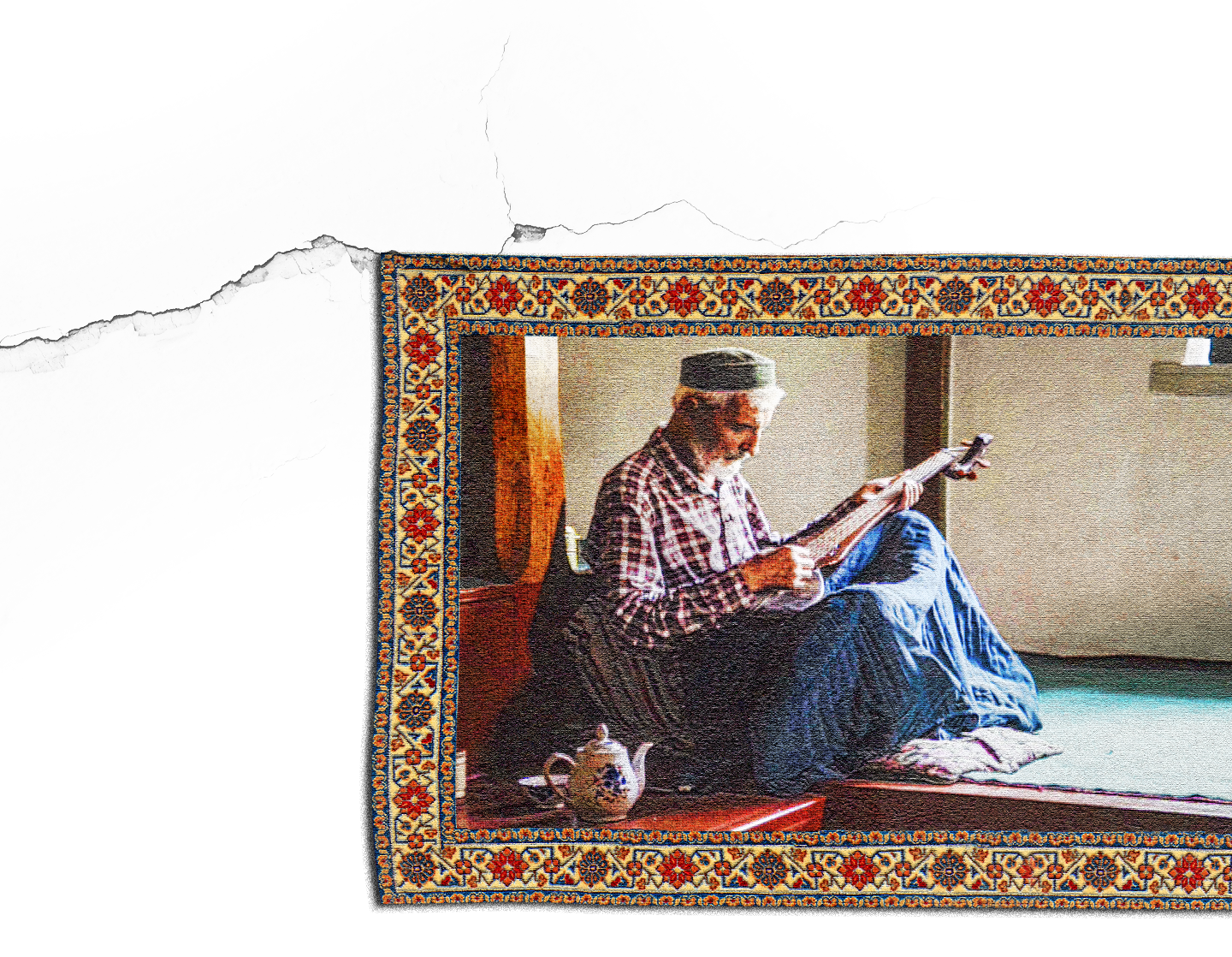
The white walls symbolize emptiness — the quiet void left behind after losing something that once shaped daily life, something that used to fill homes with meaning.
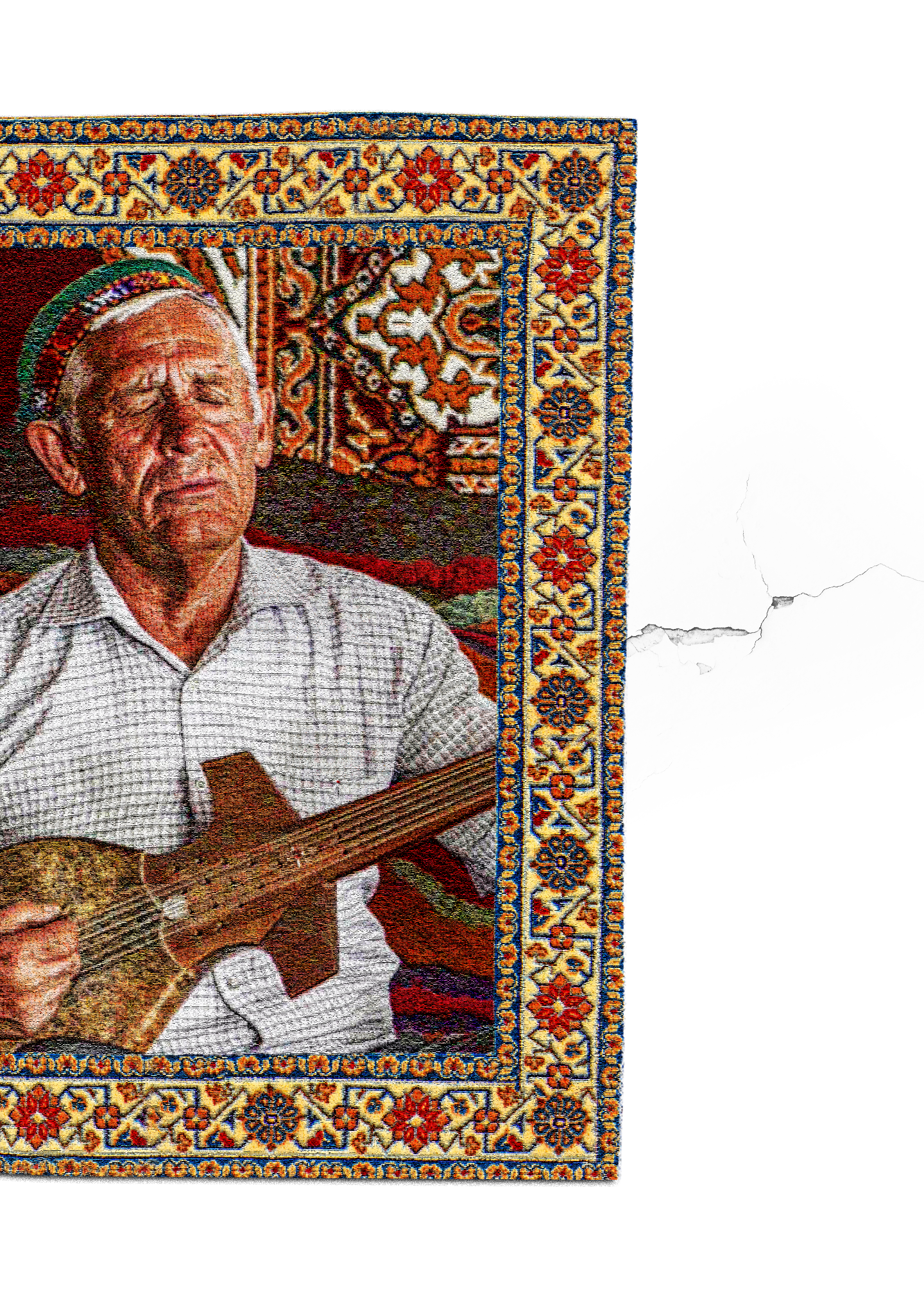
At the climax of the documentary, an old man plays a traditional instrument called the Maddoh. The moment struck me deeply, so I decided to capture it. In the story, he gives the protagonist something he had been searching for all this time.
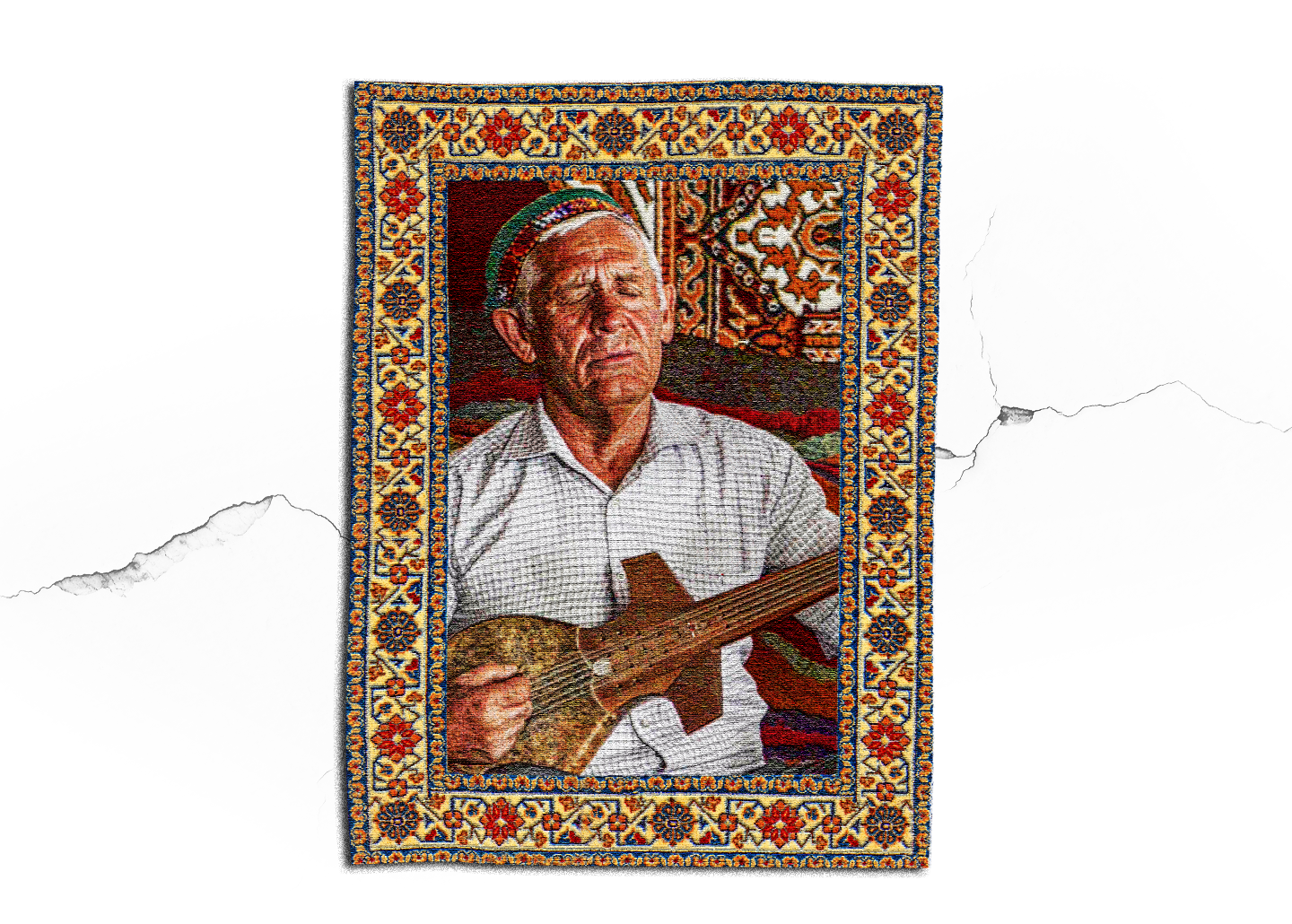
The poster was almost finished, but something still felt missing. The carpet looked old, yet I wanted it to carry more imperfections — more character. One of those details was to make the carpet incomplete.
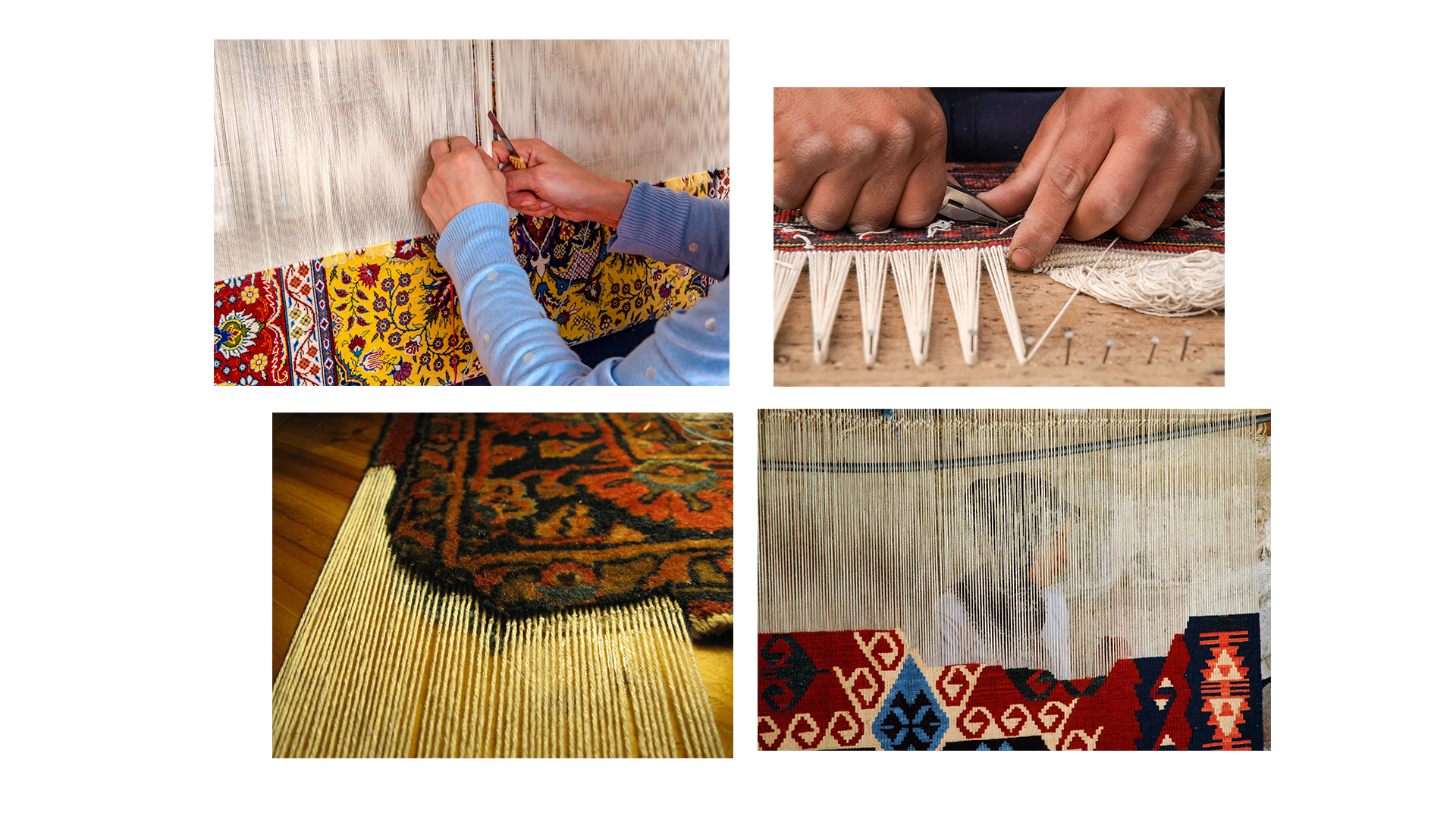
When carpets are handmade, they start as rows of loose threads that gradually come together to form a pattern. I used that idea as a metaphor for dying traditions — the carpet slowly unraveling, losing its threads piece by piece, just like traditions fading with time.
I also added some ripped parts to make the carpet look even less perfect — and, in some places, those imperfections added extra layers of meaning. For example, in one of the concepts, there’s a strangely shaped hole in the carpet with the documentary’s title placed over it. That hole actually mirrors the shape of Tajikistan’s map, symbolizing the lost traditions that were once an integral part of Tajik culture.
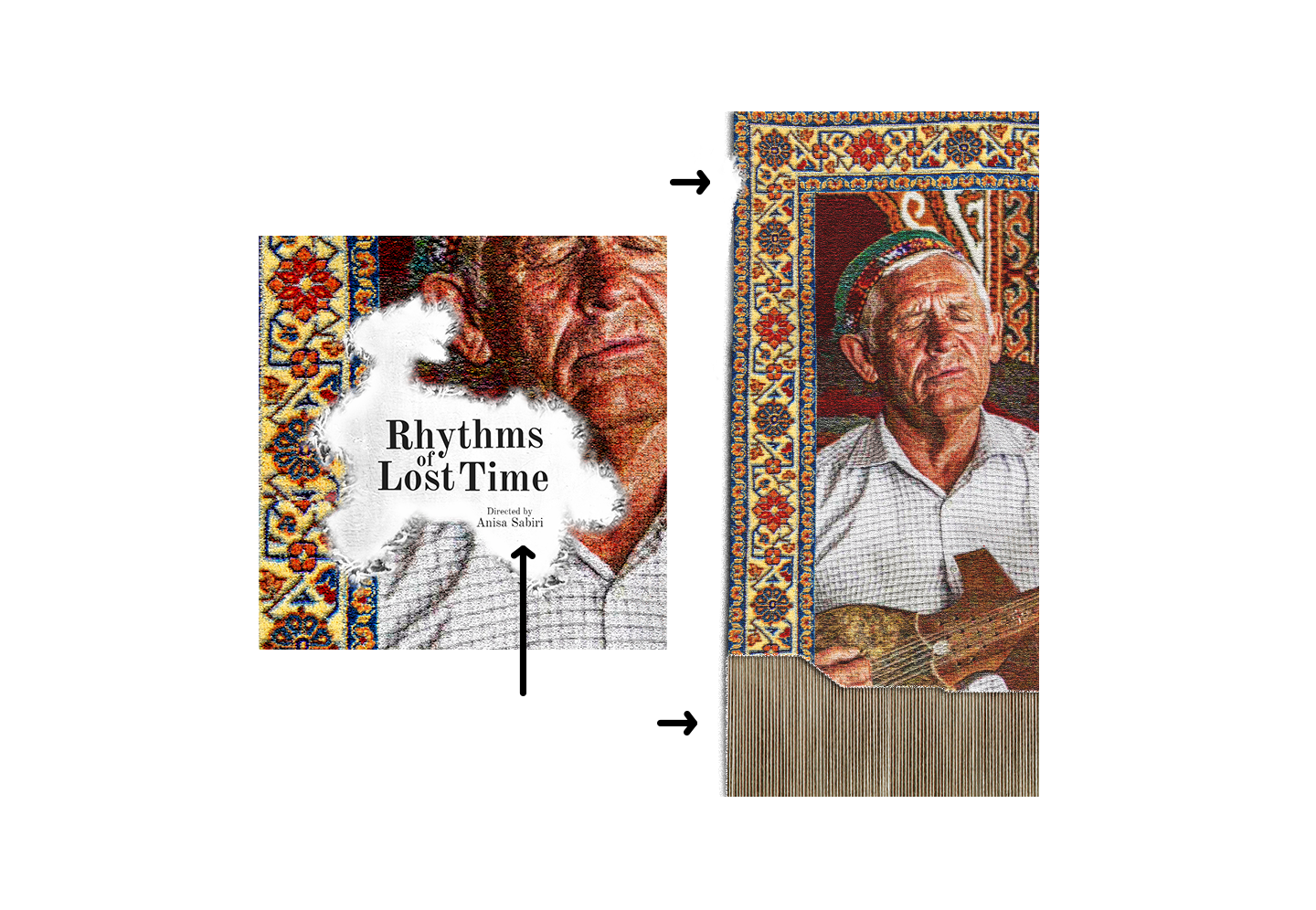
So now you can see all the narrative elements are now combined into a story of it's own.
Here you can watch the trailer of the documentary:
I wanted this poster to feel a bit different — to give subtle hints about the story and add something extra to the documentary itself.
I hope, in some small way, I managed to do that.
You can also check out how the very first version of the poster looked. I
t turned out completely different from the final one.
©UstoDesign